All Categories
Featured
Table of Contents
The real benefit comes from utilizing that effective infrastructure to improve operations and make the most of productivity. You measure them.
For businesses leveraging cloud hosting solutions that centralize critical software and offer a steady, accessible platform, these metrics use a clear view into performance. They assist highlight traffic jams, expose improvement opportunities, and ultimately drive profitability. For an extensive understanding of the fundamental principles of determining effectiveness, look into a useful guide on how to determine operational effectiveness effectively.
We will cover actionable insights and useful execution details for each, ensuring you get the optimum return on your technology investment. Let's dive into the KPIs that will empower your organization to work with greater accuracy and purpose. Originally developed for producing floors, Total Devices Effectiveness (OEE) has proven to be among the most effective for any asset-heavy service, including those leveraging significant cloud infrastructure.
It elegantly integrates three critical aspects: Schedule, Performance, and Quality. The final OEE rating is calculated by increasing these three percentages (Schedule % x Performance % x Quality %).
Key Efficiency KPIS for Modern Cloud AssetsWhile a perfect score is theoretical, world-class business like Toyota often attain OEE levels of 85% or higher. Executing OEE starts with recognizing the most critical restrictions or bottleneck assets in your operation. Do not attempt to measure whatever at as soon as. Focus on a single production line or server cluster to build proficiency and demonstrate worth quickly.
Scaling Multi-Cloud Asset Governance in 2026
Ford Motor Business utilizes real-time OEE control panels to give line supervisors instant presence into production issues. This allows them to detect the root cause of a slowdown-whether it's a maker malfunction (Availability loss) or a procedure bottleneck (Performance loss)-and take corrective action instantly.
As pictured, each element targets an unique type of operational loss, making OEE a powerful diagnostic tool rather than just a passive transcript. By examining which of the three scores is lowest, you can determine precisely where to focus your enhancement efforts for the best effect. Cycle Time is an essential operational performance metric that determines the overall time required to finish one complete cycle of a process, from its start to its finish.
For a law firm, this might be the time from client consumption to case resolution, while for an accounting practice, it might be the time to finish a monthly bookkeeping cycle for a client. It is one of the most crucial because it directly affects client complete satisfaction and functional cost.
It is determined by measuring the elapsed time between the completion of 2 successive units or jobs. The minute work starts on a particular job or product. The minute that exact same job or item is totally finished and prepared for the next step. Overall Net Production Time/ Variety Of Units Produced.
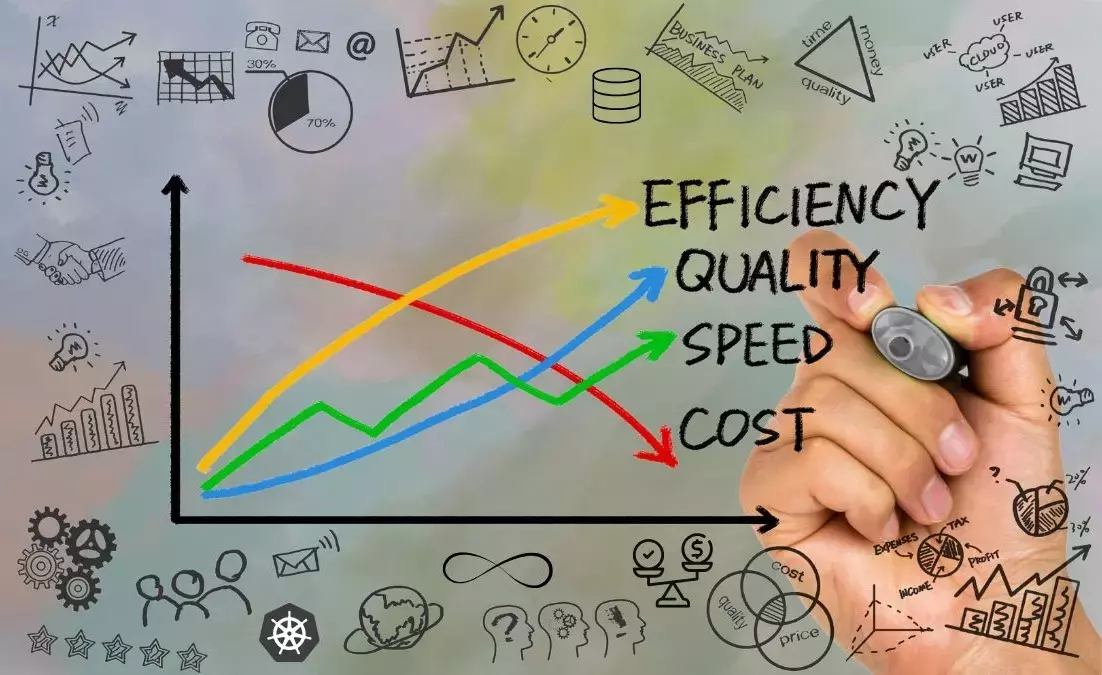
Dell changed PC manufacturing by minimizing its build-to-order cycle time to under five days, a massive competitive benefit. Similarly, Amazon's ruthless focus on diminishing its order satisfaction cycle time from days to hours, powered by storage facility automation and cloud-based logistics, has actually redefined e-commerce expectations. The first step in leveraging Cycle Time is to clearly define the start and end points of the process you wish to measure.
Governing Hybrid Infrastructure Portfolios in 2026
Don't just track the average Cycle Time; also monitor its variation or standard discrepancy. A process with a low average but high variability is unpredictable and hard to handle, typically causing more customer disappointment than a somewhat longer but highly constant process.
For a little business, this could begin with an easy shared spreadsheet where employee log start and end times. As you grow, you can execute automatic tracking within your practice management or workflow software application. The key is to evaluate the gathered information to find bottlenecks, which are the actions in the process that take the longest.

Latest Posts
Top Tips for Strategic Resource Management in 2026
Refining Cloud Resource Allocation Frameworks
Achieving Optimal Asset Performance for 2026