All Categories
Featured
Streamlining IT Resources to Maximize Enterprise Efficiency
Table of Contents
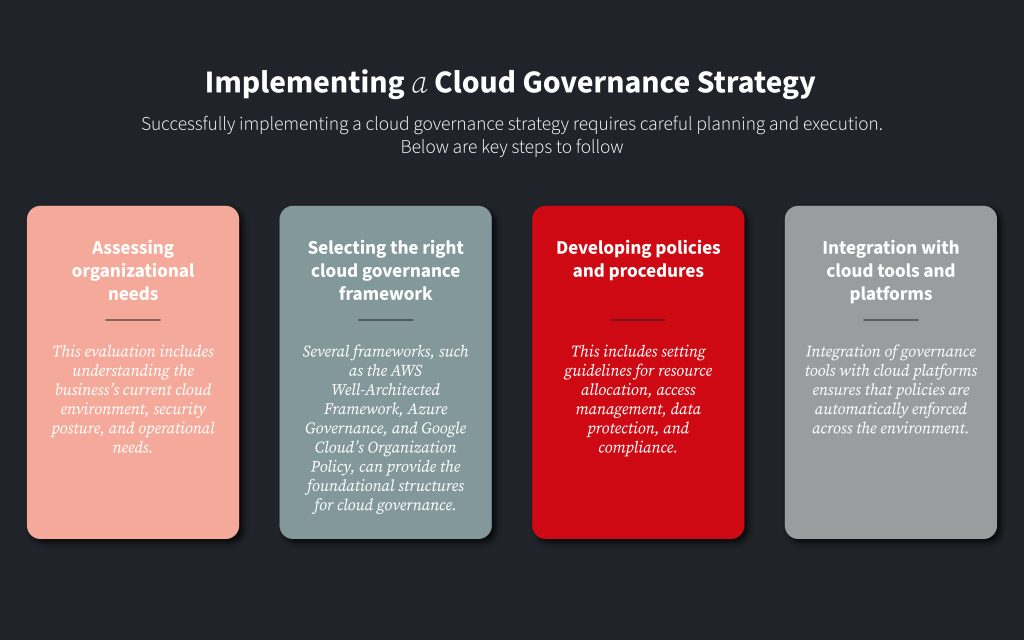
By keeping track of cloud resources and their associated costs, business can make educated decisions that align with their financial and tactical objectives. In essence, cloud possession management isn't just a side componentit's a cornerstone of digital change techniques. It makes sure that businesses can scale efficiently, control costs, and keep the dexterity required to adapt to ever-changing market demands.
Handling cloud assets is vital for organizations due to: Preventing over-provisioning and getting rid of unused cloud resources. Ensuring governance and adherence to market policies. Simplifying workflows and automating resource allocation. Acquiring insights into cloud usage and avoiding shadow IT. Bridging the space in between on-premises identity systems and cloud-native identity and access management (IAM) services can greatly improve both security and user experience.
By leveraging these integration alternatives, organizations can enable single sign-on (SSO) for cloud-hosted workloads. This simplifies authentication, letting users gain access to resources with their familiar qualifications while preserving central identity management. The key is to set up IAM controls so that roles and approvals mirror only what each user needsadhering carefully to the concept of least opportunity.
To secure delicate info in the cloud, organizations ought to execute robust encryption both in transit and at rest. Think about these tested methods: Use industry-standard procedures such as TLS (Transport Layer Security) to encrypt data as it moves in between devices and cloud services. Protected information at rest using algorithms like AES-256, ensuring files remain secured even if storage resources are compromised.
Why IT Control Stays Crucial for 2026 ROI
By using these methods, organizations can considerably reinforce their data security posture in any cloud environment. To strengthen cloud border security beyond fundamental measures, companies can employ an array of specialized tools.
These tools supply deep package evaluation, analyze network traffic for indications of malicious activity, and can automatically react to block or alert on threats as they arise. For even higher presence, think about solutions that provide real-time traffic analysis and habits tracking. This proactive approach assists spot anomalies and prospective breaches early, reinforcing your protective boundary.
A critical piece in the cloud security puzzle is the shared responsibility model. This structure clearly marks where the cloud provider's security responsibilities end and where yours beginthough the limits shift depending upon your selected cloud service design: Facilities as a Service (IaaS), Platform as a Service (PaaS), or Software as a Service (SaaS).
Analyzing 2026 Vs. Traditional Cloud Cost Governance
You, the consumer, are accountable for protecting whatever you build atop that infrastructure. This covers from installing OS patches and handling network security controls to configuring firewall programs and shielding your virtual makers with malware protection.: With PaaS, the service provider extends their protective reach to consist of the platform itselfthink handled operating systems and middleware.
You'll require to implement strong access controls, protected sensitive details, and monitor your hosted applications.: SaaS environments offload the bulk of security management to the supplier. They're charged with securing the application stack, underlying os, and network settings. Your primary focus shifts to protecting user access, managing usage policies, and safeguarding your company's data within the application.
Utilize both built-in and third-party security tools to strengthen the areas under your control. Keep gain access to policies, keeping an eye on practices, and data defense protocols approximately date, no matter your cloud intake model. Cloud security isn't one-size-fits-all, but with a clear grasp of your function in this partnership, you set the stage for a safer, more resistant environment in the cloud.
Instead of handling a patchwork of diverse toolseach with its own control panel and finding out curvesecurity groups get one comprehensive view into endpoints, work, identities, and data security. This combination lowers complexity, making it much easier to track potential dangers as they unfold, without the requirement to hop in between numerous user interfaces to get the full photo.
Is Current Enterprise Budget Ready for 2026?
By managing defenses, monitoring, and policy release from a main console, groups are empowered to implement constant security steps throughout accounts, regions, and projects in one go. This technique minimizes the overhead of handling multiple licenses, decreases administrative problem, and makes sure policies are implemented uniformly. Ultimately, consolidating security controls boosts presence, efficiency, and agilitycore active ingredients for equaling progressing cloud needs.
Rather than leaving groups to rush in the midst of turmoil, these plans use a clear strategy must an event take place. With predefined obligations and structured workflows, everyone knows their rolethink of it as assigning seats on a lifeboat before the storm hits. Having this framework in location yields several key advantages: Immediate and coordinated action assists include risks before they mushroom.

Latest Posts
Top Tips for Strategic Resource Management in 2026
Refining Cloud Resource Allocation Frameworks
Achieving Optimal Asset Performance for 2026